EAC Certification When Importing from China: What to Ask Your Supplier
A Chinese factory cannot issue an EAC certificate. Six checks before payment, and why a certificate issued in three days will not hold up.
Read full article →Practical articles on sourcing, factory audits, quality control and EAC certification — for Russia & CIS buyers.
All guides are free and written to help you buy from China safely and avoid common pitfalls.

A Chinese factory cannot issue an EAC certificate. Six checks before payment, and why a certificate issued in three days will not hold up.
Read full article →
A practical guide for Russia & CIS buyers: what a real factory audit checks, what it costs, and how we then negotiate prices as local buyers in Ningbo.
Read full article →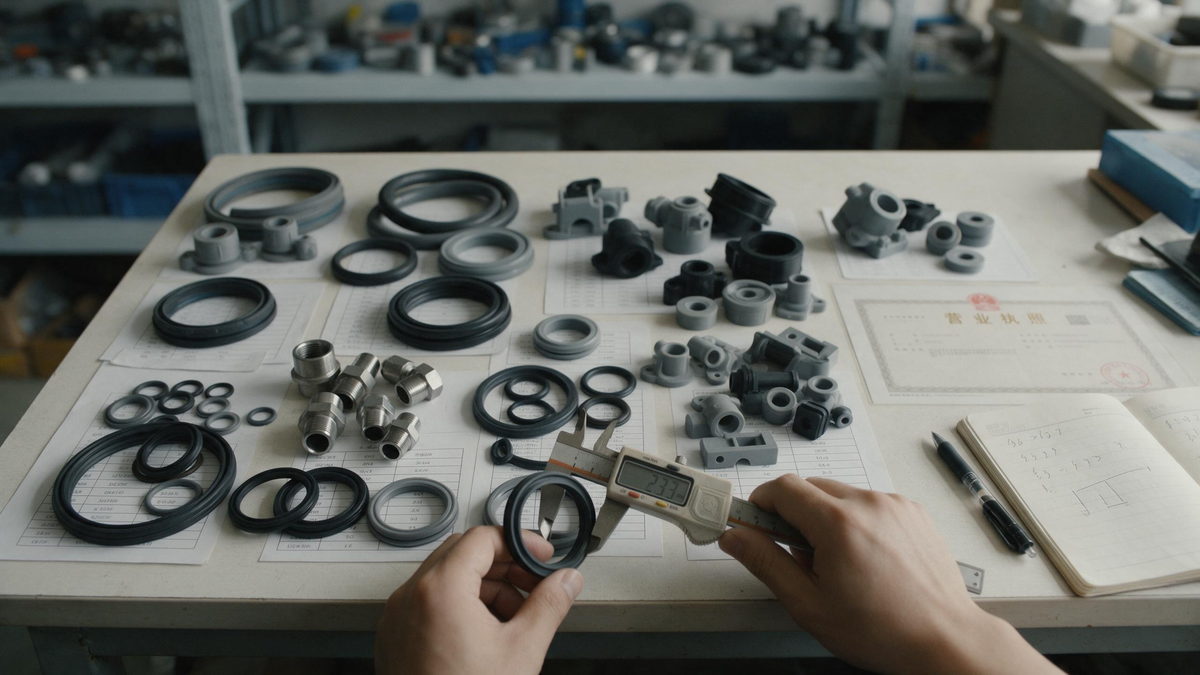
A practical checklist for Russia & CIS buyers: verify licenses & export experience, request samples, conduct on-site visits, and confirm the factory can issue EAC-compliant documentation before committing to large orders.
Finding a reliable manufacturer in China starts long before you place an order. The biggest import failures come from skipping verification steps and relying on low prices alone.
Check the business license, factory registration and export qualifications. Confirm the factory actually produces the category you need — many trading companies pose as factories.
Request production capacity figures, existing export records and certificates such as ISO. Ask for reference clients in your region or product segment.
Always request samples and compare them against your specification — material, dimensions, finish and packaging. Never approve production without an approved sample.
An on-site visit by a local inspector is the strongest verification. Photos and video of the workshop, equipment and quality system tell you more than any website.
If you cannot manage the process from your country, an experienced sourcing agent handles verification, negotiation, inspection and shipping — and keeps you accountable at every step.

Focus on production capacity, quality system, workshop conditions and documentation. Document everything with photos and video, and confirm the factory can meet EAC (TR CU) requirements.
For goods headed to Russia & CIS and the EAEU, the factory audit is not only about quality — it is also about compliance readiness for EAC (TR CU) certification and the documentation that comes with it.
Production capacity and actual output, workshop and equipment condition, quality management system, incoming material control, and document & license completeness.
Manufacturers without proper records often fail certification audits later. Ask to see test reports, material certificates and prior export documents.
Building materials exported to the EAEU fall under TR CU technical regulations. The audit should confirm the factory can supply the technical files, test reports and conformity documents needed for the EAC declaration or certificate.
An audit without visual evidence is not verifiable. Photos and short videos of the workshop, machines and quality lab make the report trustworthy for your own decision-making.
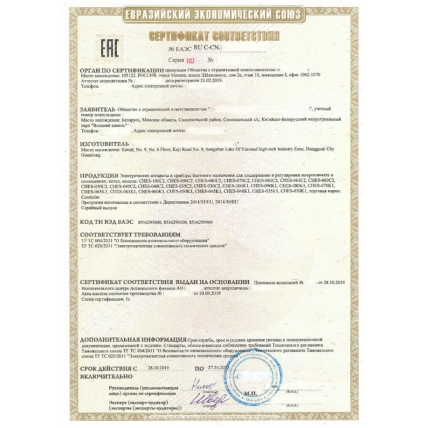
EAC (TR CU) is the Eurasian Economic Union conformity system. Regulated products need an EAC declaration or certificate via accredited bodies before entry.
EAC (TR CU) is the conformity system of the Eurasian Economic Union (EAEU). Products covered by a TR CU technical regulation must carry an EAC declaration or certificate before they can be imported into Russia & CIS and other member states.
Depending on the product and the technical regulation, conformity is confirmed either by an EAC Declaration of Conformity (DoC) or an EAC Certificate of Conformity (CoC). A CoC is issued by an accredited certification body; a DoC is registered based on the applicant's evidence, sometimes with mandatory testing. The relevant TR CU regulation tells you which one applies.
Building materials fall under TR CU 014/2011 (construction safety). The manufacturer or importer registers the product, an accredited body assesses conformity, and the EAC document is issued before the goods ship. For many products a DoC registered in the EAEU system is enough; for others a full CoC with testing is mandatory.
Confirm the factory holds valid test reports; verify the product technical specification matches the HS code; and involve your sourcing partner early so documents are ready before shipment.
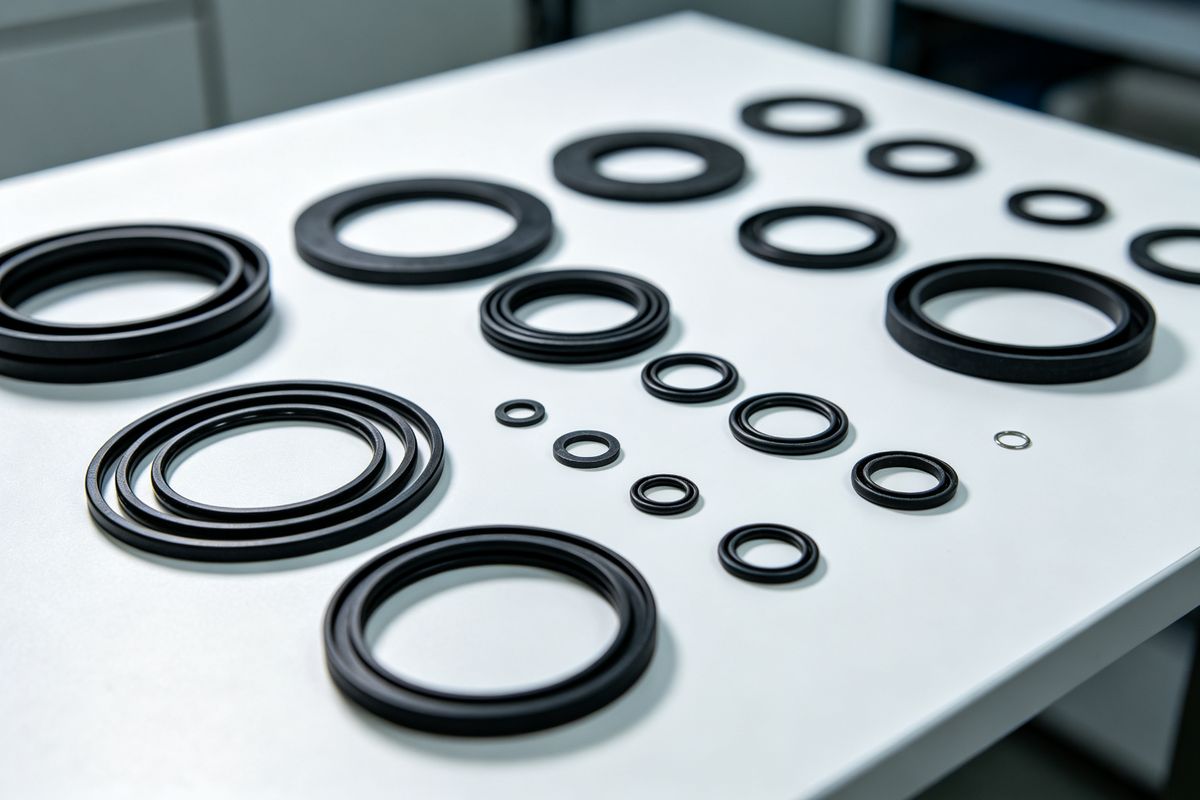
Material substitution, dimensional deviation and inconsistent batches are common risks. Require material certificates and dimension checks before shipment.
Rubber seals may look identical but differ hugely in material grade, hardness and resistance — which directly affects performance in your application.
Some suppliers substitute cheaper compounds (e.g. lower-grade NBR for EPDM) to cut cost. Always request the material certificate and batch test reports.
O-rings and gaskets must meet tight tolerances. Specify critical dimensions in writing and have samples and production batches measured with calibrated instruments.
Quality can vary between production runs. Batch inspection with AQL sampling, photo evidence and hardness/elasticity checks reduce this risk significantly.
Verifies the compound, checks material certificates, measures samples, and performs pre-shipment inspection — so the goods match your specification before they leave the factory.

Quality control starts before production: sample approval, raw material checks, in-line inspection and AQL pre-shipment inspection — before the goods leave for Russia, Kazakhstan or other CIS destinations.
Controlling quality during mass production is a system, not a single check. The earlier you intervene, the cheaper the correction.
Freeze the specification, approve the sample, and confirm raw materials and packaging before the line starts.
Check incoming materials against the agreed spec — this prevents systematic defects from day one.
Visit or have inspectors check during production: workmanship, dimensions, and process compliance while issues are still fixable.
Inspect finished goods with a sampling plan before loading. Photo and video reports give you verifiable evidence.
When defects are found, require rework and re-inspection before shipment — never ship questionable goods.
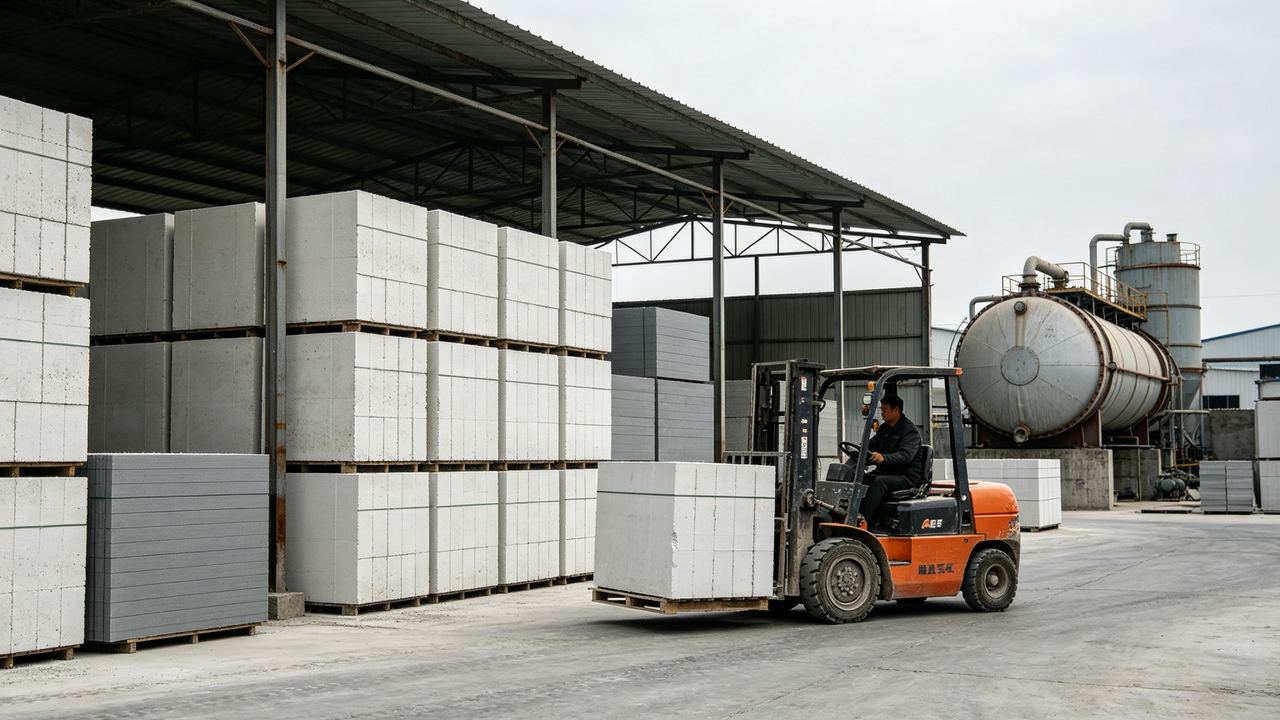
Start with compliance (HS code and EAC/TR CU) before searching for a plant, then verify the real autoclave, production capacity, density and compressive strength. An on-site audit matters before you order.
Most buyers start by typing "AAC block manufacturer China" into a search box. That's backwards. If your destination is Kazakhstan or another EAEU market, the compliance question comes first — because the factories you shortlist must be able to support your EAC declaration or certificate, and a surprising number of them simply can't.
AAC (autoclaved aerated concrete) is the material; ALC panels are the same material cut into reinforced wall or roof panels. If a supplier tells you they make "AAC panels" but has no steel wire mesh line and no bending equipment, they mean blocks, and that changes your spec completely.
AAC blocks and panels fall under HS 6810.11 in most declarations. For Kazakhstan, check whether your product falls under a TR CU technical regulation — TR CU 014/2011 covers construction safety — before spending a week on supplier calls. This one step saves you from building a whole sourcing plan around a product you can't legally land. If you are not sure how to check, send us the product name and destination port and we will tell you what applies.
AAC is not dried, it is cured under steam pressure in an autoclave at around 180°C. That vessel is the single most expensive piece of equipment in the plant, and some small "factories" are actually mixing lines without one. Ask three things: how many autoclaves, their diameter and length, and how many curing cycles per day. Then ask to see the curing logs, not just the machine.
The last one matters more than buyers think. AAC plants sell out their curing capacity months ahead during construction season in Central Asia, and a "yes we can ship in 3 weeks" from a full plant turns into a 10-week delay.
Beyond the autoclave: the raw material ratio control (cement, lime, sand or fly ash, aluminium powder), the cutting line precision, the lab — a real AAC plant tests density, compressive strength and moisture content in-house — and the export packaging, because aerated concrete is fragile and under-packaged loads arrive broken.
Cut samples with a wire saw in front of you, measure them, and if possible ship a trial pallet before committing to container volumes. Compliance documents and a working product are two different things; verify both.
Can small AAC plants export to Russia & CIS? Some can, but the EAC application requires the manufacturer and product data to match your declaration or certificate. If the plant has no export history and no quality documentation, the certification process becomes your problem, not theirs.
Is EAC required for AAC blocks? Building materials exported to the EAEU generally fall under TR CU technical regulations — check the specific regulation for your HS code before quoting. Our services page explains how we handle certification end to end.
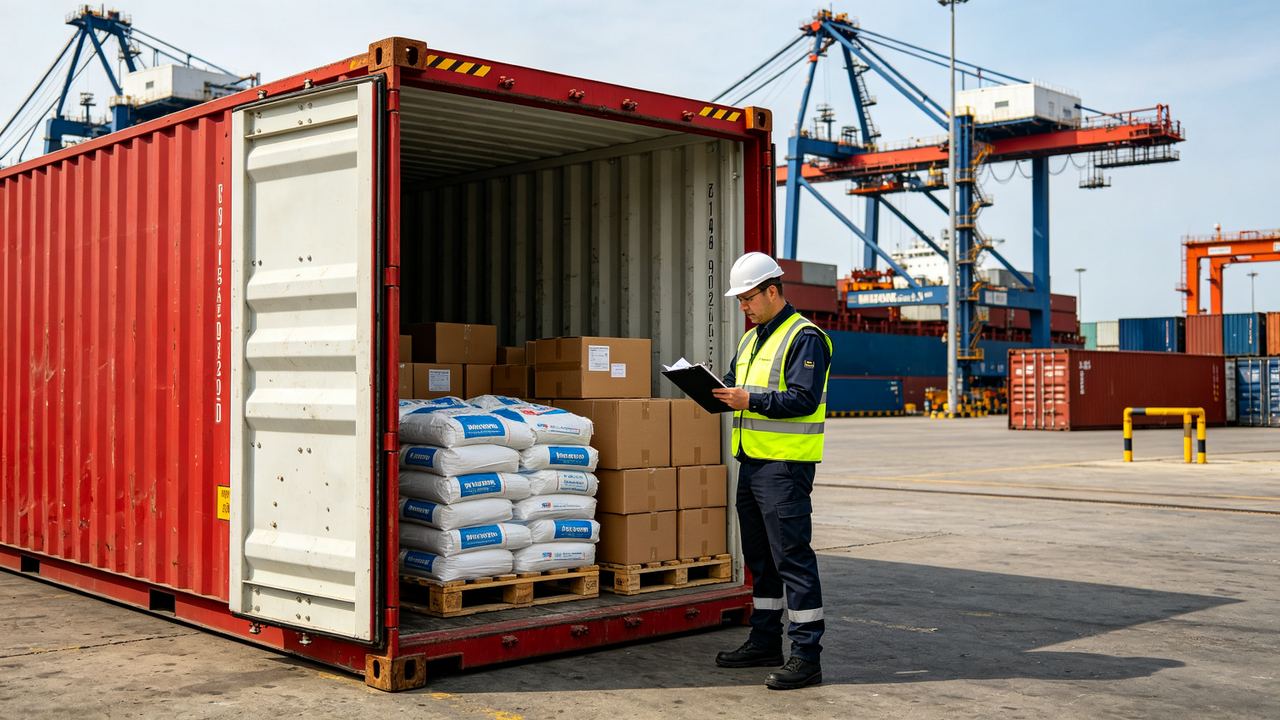
Most rejections are documentation failures, not product failures: missing EAC declaration or certificate for the batch, factory mismatch, wrong HS code, and labelling. Review the checklist before you ship.
One rejection at Aktau, Almaty or Astana can cost you more than the container's entire profit margin — storage, demurrage, return freight or a discount sale. The frustrating part: most rejections are paperwork problems, not product problems. Here are the eight we see most often, and the fix for each.
An EAC Certificate of Conformity (CoC) and an EAC Declaration of Conformity (DoC) are different documents issued under different rules. Declaring the wrong one — or shipping under a DoC when the technical regulation demands a CoC with mandatory testing — stops the shipment at customs.
The EAC document names a manufacturer. If the goods were actually produced at a different plant — or a trader sourced them from a third factory — the document doesn't match the goods. Customs can and does check this against your commercial invoice.
AAC blocks and cement-based boards are classified differently (6810, 6904, 6809...). A wrong code can mean the wrong technical regulation applies — or none at all. Get the HS code agreed before you quote.
Density grade, dimensions, model number — whatever was declared in the EAC document must match what's in the container. If the factory "improved" the formula or changed a dimension, the shipment can be rejected even though the product is fine.
The product label must carry the data required by the technical regulation — and match your invoice and certificate. A missing or different brand name is enough to stop the container.
Pallets and dunnage must carry the ISPM 15 stamp (HT or MB) and be made of treated wood. Untreated wood gets flagged at the port, and treating it after arrival is a mess.
Amounts, quantities, unit prices or product descriptions that don't match the EAC document and the goods. Kazakhstan customs compares documents, and small discrepancies cause big delays.
EAC documents expire, and Kazakhstan only accepts documents issued or registered by bodies listed in the EAEU unified register. Check both before the container sails, not after it arrives.
Before loading, run a simple document checklist: EAC declaration or certificate issued, factory name matches, HS code matches, labels match, ISPM 15 marked, invoice consistent. That's exactly what we review when we arrange certification and documents for Russia & CIS shipments.
What's the difference between an EAC declaration and a certificate? A certificate (CoC) is issued by an accredited body after testing and audit, and is typically required for higher-risk products. A declaration (DoC) is registered by the applicant (manufacturer or importer) with supporting evidence. The TR CU regulation for your product states which one is mandatory.
Can I fix a rejection after it happens? Sometimes — a re-inspection or a corrected SCoC can release the goods — but it costs weeks and money. Prevention is cheaper. If you're already in this situation, contact us with your documents and we'll tell you what's recoverable.
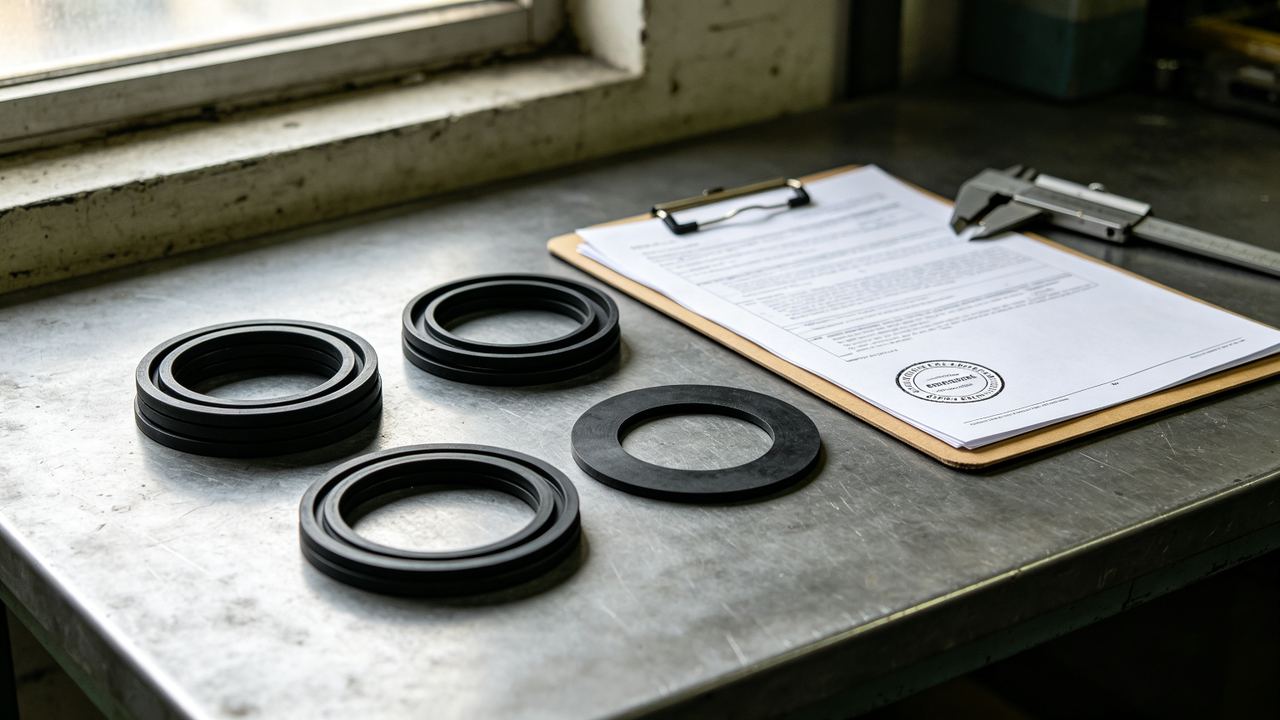
Most general rubber seals (HS 4016.93) are outside the mandatory EAC list, but some applications fall under other regulations. Verify the HS code and product category before shipping.
The short answer: for a standard O-ring or gasket under HS 4016.93, an EAC document is usually not required. The honest answer: "usually" is not a compliance strategy, and the way to be sure takes about ten minutes.
EAC certification covers products under specific TR CU technical regulations — building materials, machinery and equipment, electrical goods, automotive parts and others. A plain industrial O-ring is generally not on that mandatory list. But the moment your seal is sold as part of a regulated assembly — a valve, a pipe fitting, an automotive component — the finished product's technical regulation may pull the seal in too.
If the seal is part of a regulated product you import and resell (fittings, pumps, automotive parts), the certification follows the finished product. If your customer is a government or semi-government project in the EAEU, they may require compliance documentation even when the product is technically exempt. Customer requirements sometimes exceed legal minimums.
The process is the same as for other products: register the product, have conformity assessed by an accredited body, then receive the EAC declaration or certificate. Timing is typically 1–3 weeks for a straightforward rubber product, longer if the product needs lab testing. Fees depend on the product category and the certification body — get a fixed quote before you start, not a surprise invoice.
We handle the whole EAC application for Russia & CIS-bound shipments — see what's included in our services.
Is EAC the same as GOST certification? GOST-K was the national certification system of Kazakhstan. EAC (TR CU) is the unified conformity system of the Eurasian Economic Union. You may still hear "GOST certificate" — in practice, for imports into Russia & CIS it usually means the EAC process.
How much does an EAC certificate cost? It varies by product category and certification body — typically a few hundred USD for a declaration and more for a certificate with testing. Ask for an itemised quote.
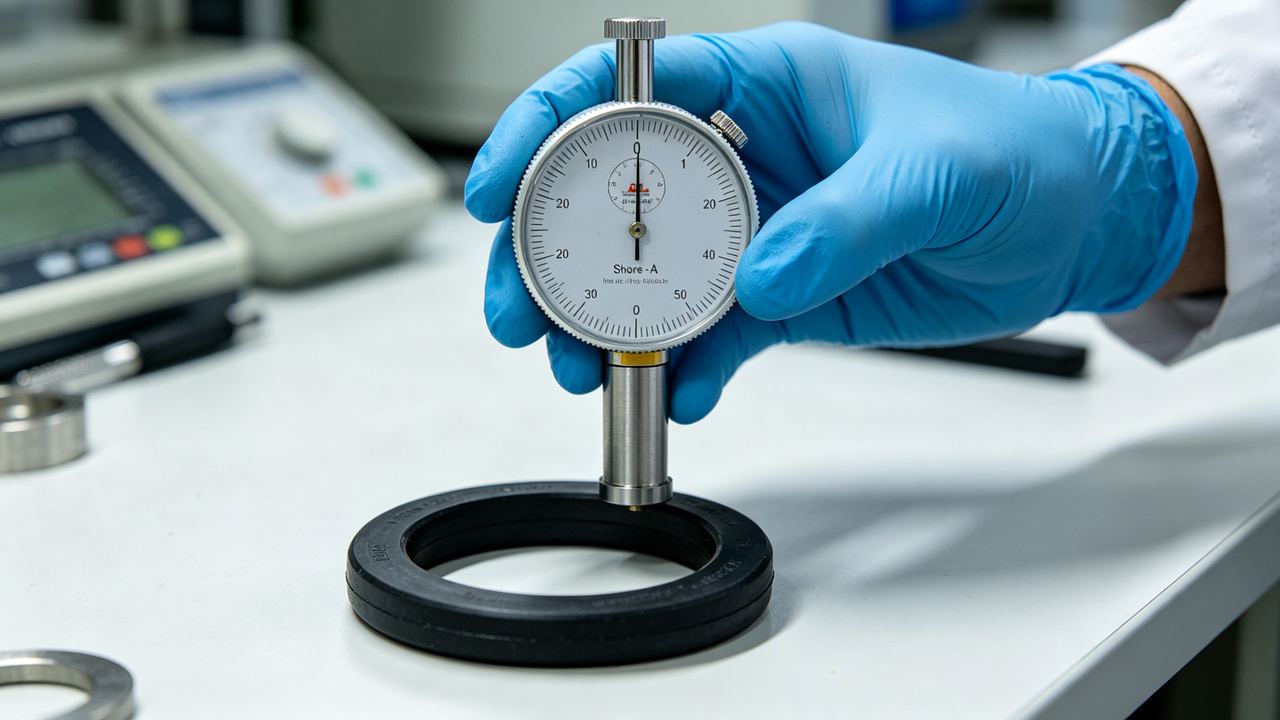
We measure hardness (Shore A), dimensions and tolerance, check appearance (flash, bubbles), review material certificates, and sample per AQL. Material mix-ups (NBR/EPDM) are the most dangerous seal failure.
A rubber seal is cheap. The machine it protects is not. That's the whole reason seals get inspected even when the order value is small. Here's what actually gets checked, in the order we do it.
The most dangerous defect in a seal batch is invisible: the wrong rubber compound. NBR and EPDM look almost identical to the eye, but NBR swells in oil and EPDM doesn't — put NBR where EPDM belongs and the seal fails in weeks. So we check the material certificate against the agreed compound, measure Shore A hardness with a durometer on a handful of samples, and for critical applications run a simple oil-immersion or heat-ageing spot test.
For an O-ring, that means the inside diameter and the cross-section (cord) diameter. A projection microscope or calibrated calipers, checked against the drawing tolerance — commonly around ±0.05 mm on the cord for a standard ring. A ring that's right on material but 0.2 mm off on cross-section will still leak under pressure.
Flash (the excess rubber left from the mould parting line), bubbles, inclusions, cut or dirty parting lines, and deformation in the bag. Most of these are process problems that repeat across the whole batch, so a few bad samples mean the entire production run needs review, not just those pieces.
For standard industrial seals we use AQL 2.5, General Inspection Level II. That's the same sampling discipline used for far more expensive products, and it gives you a defensible basis if a dispute ever happens — the inspection record, not the argument, decides the outcome.
This is exactly the sequence we run under our inspection packages — and the photo-and-video record in the report is what makes it usable if something goes wrong later.
How do you measure rubber hardness? With a Shore A durometer pressed against the seal surface. Hardness is the fastest single check of whether the compound matches the spec — a 70 Shore A ring that measures 55 is either the wrong compound or badly cured.
How can I tell NBR from EPDM? You can't reliably by eye. Weight per piece and hardness are hints only. The practical answers are the material certificate, a burn test (smell and ash differ), or an oil-immersion test — which is what inspectors do.
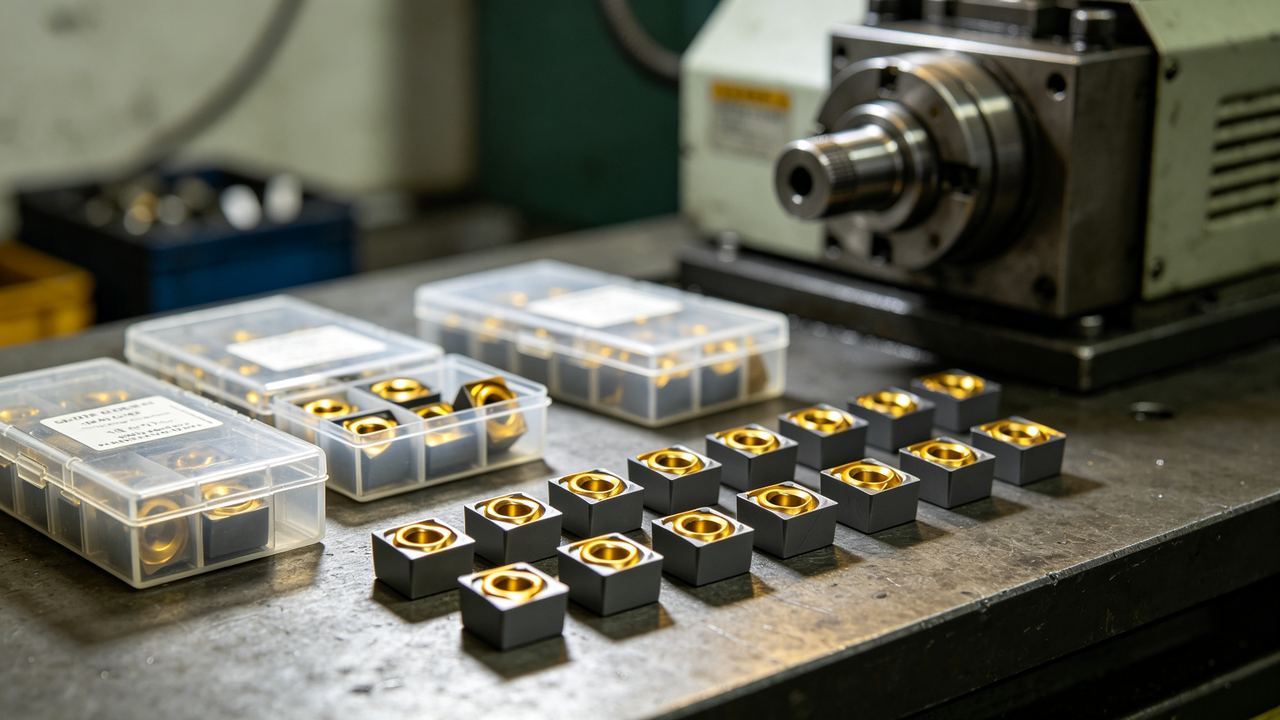
Define the grade (ISO) and coating (CVD/PVD) clearly, verify the sintering plant and inspection equipment (XRF), compare weight and fracture, and run a small trial batch before large orders.
The fastest way to spot a counterfeit carbide insert is the price. The second fastest is asking for the coating specification and watching the supplier hesitate. Cutting tools are one of the few industrial categories where a fake can cost you more in damaged parts and lost machining time than the tool itself is worth — and China has plenty of both good and bad suppliers.
A carbide insert is tungsten carbide powder pressed and sintered, then coated. The grade (the mix of tungsten, cobalt and other carbides) and the coating determine performance. Neither is easy to verify visually, and the margin on "equivalent grade" inserts is high. So some sellers quote a known brand's grade and ship whatever's cheapest.
Real carbide plants run sintering furnaces and have a lab. Ask for the sintering line, the XRF or spectrometer they use to check composition, and the hardness and transverse rupture strength tests on their QC records. A trading office with a warehouse and no lab can still sell you good inserts — but then the verification burden shifts to you, which is exactly when a counterfeit slips in.
Put the grade, coating and batch number on the purchase order. Keep samples from each batch. If a batch fails in the field, the sample and the PO are what let you claim — otherwise it's your word against a supplier who "didn't know".
How do I know if an insert is counterfeit? Start with price (too good to be true usually is), then check the grade and coating spec, the batch weight and a destructive test on one piece. A reputable supplier answers these questions in minutes.
Are "equivalent" carbide grades safe to buy? Sometimes, but only with a material certificate and a trial batch. "Equivalent to grade XYZ" means nothing unless the supplier can show the composition and testing behind it.
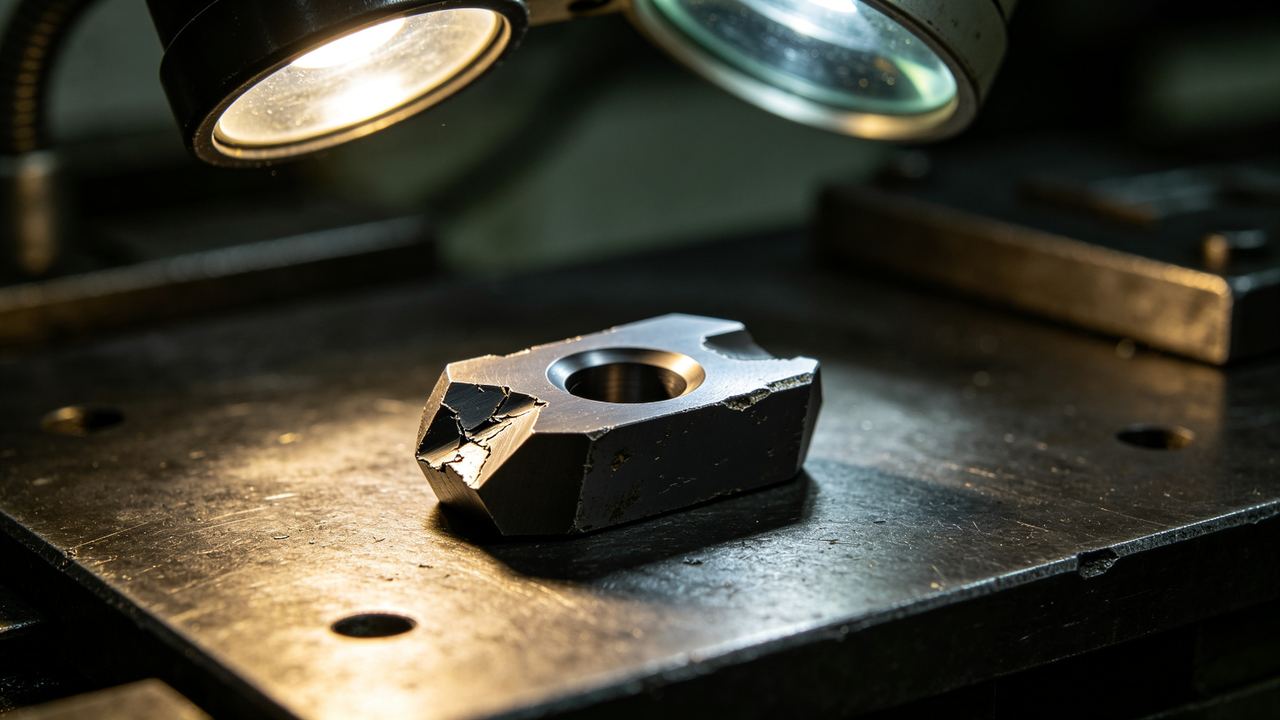
The bigger risks aren't outright fakes — they're grade substitution, batch drift and thinner coatings. For Russian industrial buyers, control them with the contract, a trial batch, retained samples and correct EAC/GOST documentation.
Ask any importer about cutting tool risks and they'll say "counterfeits". That's the easy answer. The risks that actually eat margins are quieter: the first batch is perfect, the third one isn't, and nobody can prove who changed what.
You approve a batch of P25 carbide inserts. On reorder, the factory "improved" the mix or quietly moved to a cheaper grade with similar packaging. Performance drops, and the supplier points at your process. This is why the grade must be in writing on every PO, not just the first one.
A three-layer coating and a single-layer coating can look identical in a photo. The difference shows up as tool life. Unless the coating type and layer count are specified and checked, you're buying a guess.
Carbide production is statistical. Sintering temperature, powder lot and pressing pressure drift between runs. A factory with good QC holds the drift inside tolerance; a factory without it ships whatever came out. Incoming batch testing — weight, hardness, a cutting trial — is the only reliable filter.
Inserts must sit in the tool holder within tight tolerances. A slightly oversized corner radius or a burred hole changes cutting geometry. Cheap inserts from the same mould family often vary more than the spec sheet admits. Measure a sample of every batch.
Grade stamped on the box, different grade in the box. It happens with genuine manufacturers when the warehouse picks the wrong bin — and with less scrupulous ones on purpose. Count, compare and spot-check the box against the inserts.
This is the kind of verification we run on cutting tool shipments under our inspection service — the report becomes your evidence if a batch fails later.
Should I buy cutting tools in small batches to reduce risk? Yes, especially on a new supplier. Small trial batches are the cheapest quality control you can buy, and they don't conflict with competitive pricing if you commit to a volume after approval.
Can I inspect cutting tools without opening every box? That's exactly what AQL sampling is for — a defined sample size, tested against your spec, documented in a report you can use in a dispute.
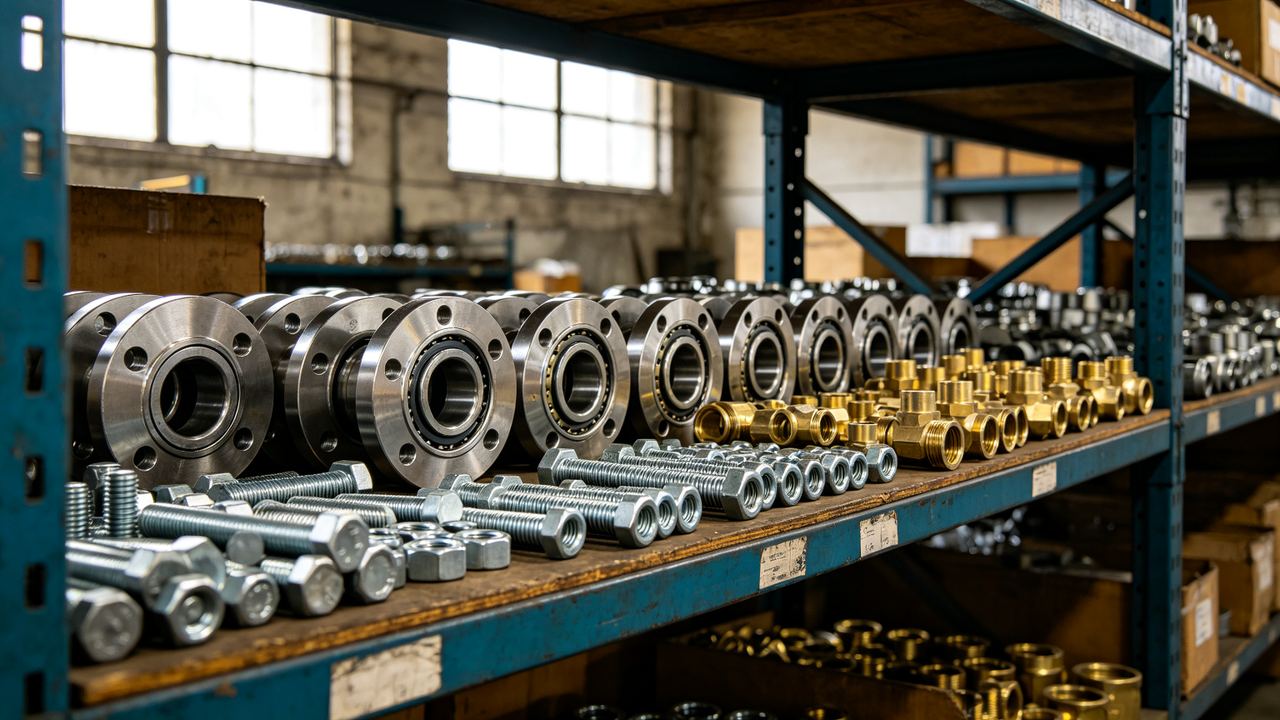
Check the supplier type (foundry/forging/machining/trader), match the material against certificates (EN/DIN/ISO) and verify surface treatment. Drawing-made parts require sample approval first.
Hardware and spare parts have a strange problem: every supplier looks the same. Bolts, brackets, flanges, machined shafts — the photos are interchangeable, and the difference is invisible until the part fails. Here's the practical way through it.
Ask which type of supplier you're dealing with and who actually produces the part. A reputable agent or trading house names the factory and shows proof; a front with nothing behind it hesitates. When you'd rather not run this vetting yourself, we do it for you — negotiating as Chinese buyers to land a lower price than you could reach on your own.
For a flange or a shaft, "steel" means nothing. You need the grade — and proof. Ask for the material certificate (EN 10204 3.1 for critical parts) and, for repeat orders, run a spectrometer check on a sample. Russia, Central Asia and CISn projects regularly require EN, DIN or ISO grades; make sure the Chinese supplier's domestic grade maps to the one in your spec before you approve, not after the parts arrive.
Zinc plating, black oxide, Dacromet (dacromet/zinc flake), nickel plating — each has a corrosion performance that a salt spray test quantifies. For cold-climate and road-de-icing environments, corrosion is the #1 failure mode of otherwise correct parts. Ask which treatment is applied, to what thickness, and whether the supplier can show a salt spray test report.
If you send a drawing, the process is fixed: drawing review (material, tolerance, thread spec, surface finish) → sample production → dimensional report → approved sample → production. Skip the sample and you'll discover the thread pitch mistake on a full container.
Central Asian buyers often need small quantities of many items. That's fine — but order mixed lines together, ask the supplier to pack by item with clear labels, and inspect by line item. A consolidated small-batch order with one inspection beats ten separate single-item orders every time. Send us your item list and we'll quote it as one package.
How do I verify the material of a machined part? A material certificate from a reputable mill plus a portable spectrometer (XRF/PMI) test on the part itself. For critical parts, do both.
What does "EN 10204 3.1" mean? It's a certificate type stating the material meets the specified grade, with test results traceable to the batch — the standard evidence for structural and pressure parts in European-standard projects.

A pre-shipment inspection isn't about finding every defect — it's about catching what would cost you more later: count, appearance, function sampling, packaging and compliance with shipping documents.
Pre-shipment inspection (PSI) is the last gate before your money and the container leave together. It can't fix a fundamentally bad batch, but it can stop the problems that would surface three ports later — which is the point. Here's the checklist we work from.
Verify the carton count against the packing list, then open a sample and count pieces. Short shipments are the most common PSI finding and the easiest to fix before loading.
Use AQL 2.5, General Level II for most products. Check against the approved sample or spec — colour, finish, print, defects. Record pass/fail per defect type with photos, so the report shows exactly what was rejected and why.
For anything mechanical or electronic, test a handful of units, not zero. A simple function check catches assembly errors that appearance checks miss entirely.
Measure against the agreed spec or drawing — the tolerance you approved, not a looser shop standard. For repeat orders, compare to the previous batch's measurements.
Inner and outer packing condition, carton labels (item, quantity, batch), and any destination requirements — EAC labels and conformity marks for Russia & CIS-bound goods, ISPM 15 on wooden pallets, country of origin marks. A document-compliant container sails; a mismatched one waits.
The inspector should reconcile the packing list, invoice and certificate against what's actually on the floor. Discrepancies found at the warehouse cost nothing; the same discrepancies at customs cost weeks.
Every step documented: cartons, labels, samples, tests, loading. This is what makes the report usable — in a dispute, the pictures decide.
First order with a new supplier, any order with quality-sensitive products, mixed-line orders, and any shipment where your margin doesn't survive a return. If it's a repeat supplier with a flawless record, you might sample lighter — but "might" is a business decision, not a default.
You have three options: reject (don't load), rework (factory fixes and we re-inspect), or accept with a discount (you both document the concession). The inspection report is what makes each option possible. Our packages include the re-inspection handling.
What's the difference between in-production inspection and pre-shipment inspection? In-production checks the process early, when problems are cheap to fix. PSI checks the finished, packed goods right before loading — it's the last chance to stop a bad shipment.
Can an inspection be done by video call? Partially — a live video walkthrough can verify count and visible condition, but it can't do precise measurements or function tests reliably. Treat video as a screening, not a full PSI.
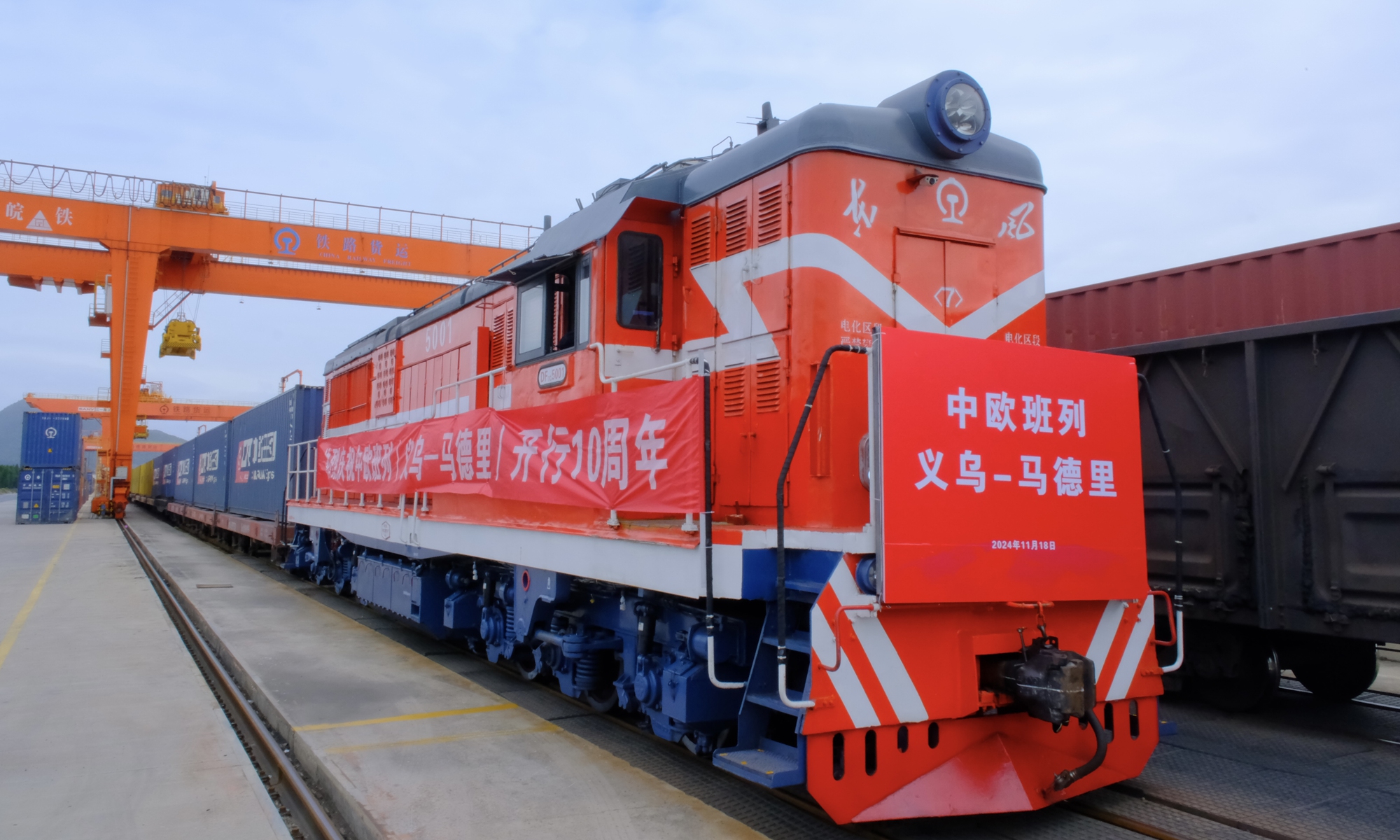
China-Europe block trains reach Moscow in 12–20 days, Almaty and Tashkent in 7–14 days. We break down routes (Alashankou, Erenhot, Manzhouli), container types, customs transit and the most common border delays that hold up Russia & CIS shipments.

A big all-category trader with 100,000 SKUs cannot read your EAC declaration, speak Russian with your factory, or know your local customs broker. We work only with Russia & CIS: EAC certification, Russian-language factory communication, rail freight and local market knowledge — built into every order.
Ask us about your product: factory search, audit, EAC certification and acceptance inspection — we share practical guidance for free.
Send us your product and destination — we will share practical steps.